
Seconda, collective intelligence to elevate your legal expertise


A month with Seconda
Welcome to the first edition of our newsletter in English!
We hope you had a lovely summer and have hit the ground running this autumn.
With our website now available in English, the time felt right to launch an English edition of our newsletter as well.
Each month, you will find five columns:
-
Key Update: one item worth remembering, either about life at the firm or about a legal development we believe is worth sharing. This month: the launch of our website in English!
-
Seconda News: the latest from the firm. This month: Néda attended the ACE Congress in La Grande-Motte and Fred-éric travelled to Marseille to take part in the Juris'Cup.
-
Seconda Reflex: a real-life situation, drawn from actual cases, that lawyers will recognise and where Seconda can provide the answer. This month: when you come up against a plea of inadmissibility and the sleepless nights start piling up.
-
Secondant of the Month: a portrait of one of the Secondants, the academics and lawyers who make up Seconda. This month: Anne-Sophie Lebret, Associate Professor of Private Law with a passion for passing on knowledge.
-
Question of the month: a question of French law we take a closer look at. This month: the recognition of harm suffered by the animal in its own right.
Enjoy your reading!

Key Update
Our website is now bilingual: www.seconda.fr/en!
This summer, we took another step in our international development by making the site accessible to legal professionals worldwide.
Because even in 2026, obtaining a reliable answer on a point of law in an unfamiliar jurisdiction can still be one of the most challenging aspects of international legal practice.
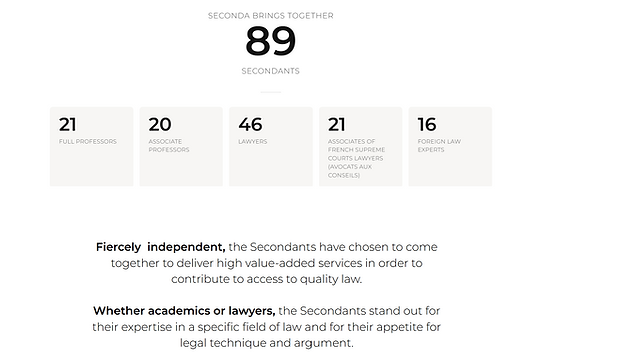
Foreign practitioners will now find what our French colleagues already rely on: expert answers on any question of French law, produced by Seconda with its 89 Secondants, practising lawyers and academics.
We would be glad to hear from legal professionals around the world: whether you have a question of French law to put to us, or simply a view on the new site, our door is open.

Seconda News
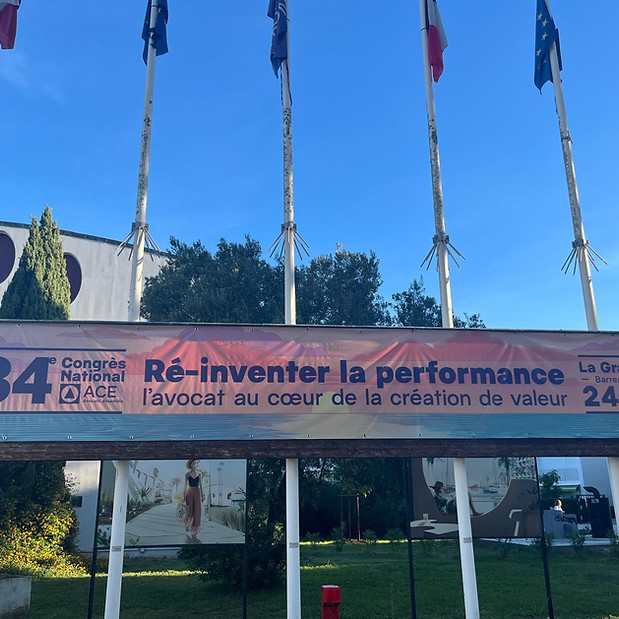
Néda at the ACE Congress...
Setting course for La Grande-Motte, on the Mediterranean coast near Montpellier, to kick off the new season!
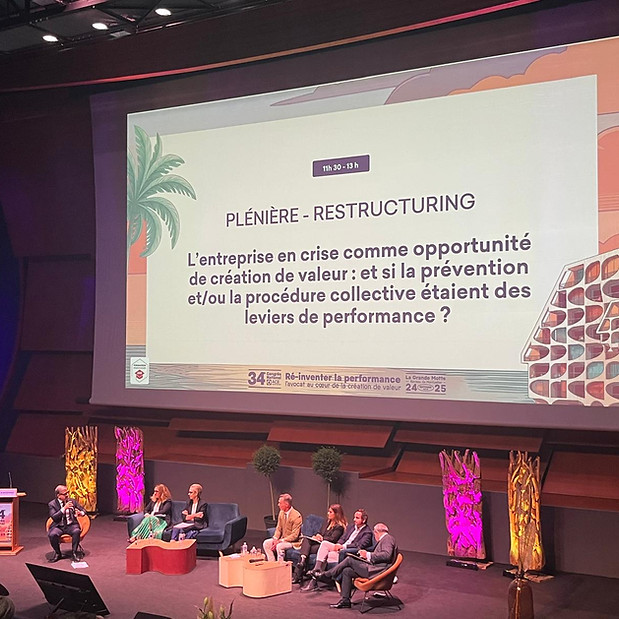
Néda represented Seconda at the 34th National Congress of the ACE, a French lawyers' union, on 24 and 25 September. This year's theme: "Reinventing performance: lawyers at the heart of value creation".
Among the workshops she attended:
-
"Hardship and imprecision in contracts: the law, the judge and the drafter", ten years after judicial revision of contracts for unforeseen change of circumstances (imprévision) was introduced into the French Civil Code;
-
"The Pay Transparency Directive: what is it hiding?", on the EU directive strengthening equal pay between women and men through pay transparency;
-
"Wealth and inheritance: a society of heirs… and heiresses?", featuring a distinguished Full Professor at Toulouse Capitole University (and a Secondant)… Nadège Jullian!
Our favourite was this last workshop, led by five outstanding speakers, including the philosopher Mélanie Plouviez and, of course, Nadège, as brilliant as she is funny.
And because at the ACE, performance never comes without a good dose of fun, Thursday evening's beach party had a rather special dress code: superheroes.
We'll let you guess which costume Néda chose!

...Fred-éric at the Juris'Cup

A few days earlier, Fred-éric was in Marseille from 17 to 20 September for the 35th Juris'Cup, the regatta that brings legal professionals together every year.
A slightly more festive programme: races under the Marseille sun and plenty of friendly moments between legal professionals and legal tech players, both ashore and at sea.
A wonderful atmosphere, from the first day to the last.
And because there is more to life than law, here is one last photo of Fred-éric, deep in concentration during the… pétanque tournament (French boules, naturally).
.jpeg)

Anne-Sophie is an Associate Professor at Nantes Université
Secondant of the Month
This month, meet Anne-Sophie Lebret!
Anne-Sophie is an academic who loves the law, because there is always something new to discover, and who also loves guiding students through their preparation for the French bar entrance exam (CRFPA) and offering teaching that is as clear and sharp as it is innovative.
Rural law, an unexpected extension of specific contracts
A keen contract law enthusiast, Anne-Sophie has found herself an unexpected playground: rural law. Through her news briefs for Dalloz actualité on agricultural leases and the pre-emption rights of the SAFERs (the French rural land agencies), she has immersed herself in this complex and very practical field.
“Although it is still the law of specific contracts, I probably would not have taken such an interest in agricultural leases and the SAFERs without these publications. You find mechanisms similar to those of other leases, but sometimes a very different logic: reconciling property rights, farming and family succession.”
She has in fact just finished a case note on a ruling of 9 July on how the failure to properly notify the ousted purchaser affects the time limit for challenging a pre-emption decision.
A demanding yet accessible tool for the CRFPA
For the past three editions, Anne-Sophie has written the civil law section of Dalloz's CRFPA preparation handbook. The aim: a demanding yet accessible tool for those who cannot afford a private prep course.
“I try to write concise, effective revision sheets, geared towards a problem question or a legal opinion exercise.”
Passion and innovation as the driving forces of her teaching
Finally, Anne-Sophie teaches not only with passion, but also with inventiveness. Without ever claiming the label, she applies several principles close to legal design: judgments dissected live, diagrams that come to life as the explanation unfolds and, most recently, Wooclap to test students' knowledge in the lecture hall.
“Some students need to visualise in order to understand. For suretyship, three little stick figures and a few arrows can be more effective than a whole page of explanation.”
Ultimately, whether it is a CRFPA handbook, a brief on the SAFERs or a law lecture, the common thread remains the same: making people want to understand complex subjects, with passion and simplicity.
And that, no doubt, is Anne-Sophie's real talent.
Seconda Reflex
> Context
The plea of inadmissibility you did not see coming, the one that turns long days of reflection into short nights of anxiety.
The databases have been searched and arguments have been found, but faced with settled adverse case law or scholarly opinion working against you, you find yourself alone and at a loss.
Which is a shame, because on the merits, the case is sound.
> The case
Early May: a preliminary agreement for the sale of a property (compromis de vente) is signed.
End of July: the day of completion arrives, and the sellers fail to show up.
Early August: they are sent a formal notice, to no avail.
Late September: the buyer brings proceedings for a court declaration that the sale has been concluded.
The sellers' response: the agreement gave the buyer only one month, from the refusal, to bring the matter before the court.
The claim, they argue, is time-barred.
The point at stake
On the one hand, Article 2254 of the French Civil Code prohibits the parties from contractually reducing the limitation period to less than one year.
On the other, case law, widely criticised by legal scholars, classifies clauses that reduce the time limit for bringing proceedings to less than one year as “contractual time bar” (forclusion conventionnelle), thereby removing them from the scope of Article 2254.
> Our answer
A set of arguments, ready to be incorporated directly into the written submissions.
Characterisation of the clause, distinguishing the rulings that did not match the facts of the case, demonstration of a material impossibility of acting, amounting to a manifest infringement of the right of access to a court: every argument was put under the microscope to support our fellow lawyer and their case.
> Time/Cost/Crew
-
3 days
-
€2,000 excl. VAT
-
A Full Professor specialising in civil procedure and an associate at a firm of avocats aux Conseils (lawyers admitted to the French Supreme Courts)
Question of the Month
Towards recognition of harm suffered by the animal in its own right?
Every animal is “a sentient being”, according to Article L. 214-1 of the French Rural and Maritime Fishing Code.
This characterisation echoes the well-known Article 515-14 of the Civil Code, which defines animals as “living beings endowed with sentience”.
In the Criminal Code, this sentience translates into the criminalisation of harm to an animal's life or physical integrity, as well as of abuse, acts of cruelty and ill-treatment of animals.
In civil law, it inevitably raises the question of whether the suffering endured by an animal can be regarded as a legally compensable harm of its own, independent of that suffered by its owner.
The 1962 Lunus ruling is well known: the owner of a domestic animal may claim damages for emotional distress (préjudice d'affection) resulting from the animal's death.
But what about the harm suffered by the animal itself, resulting from the pain it has endured?
Some lower courts have recognised it as compensable harm. Others have refused to go down that path.

In favour of refusal:
-
while Article 515-14 of the Civil Code defines animals by their sentience, it nonetheless subjects them to the legal regime governing property;
-
compensating an animal's own harm would require recognising the animal as a legal person, which would be inappropriate since an animal cannot bear obligations; such legal personality would be incomplete, as the animal would be a creditor but never a debtor;
-
to ensure the legal protection of animals, it would be enough, as the Criminal Code does, to prohibit human beings from harming the integrity of animals, except where the law permits such harm.
Conversely, it is argued that granting legal personality would be the best way to strengthen the effective and comprehensive protection of animals.
The very existence of a necessary link between compensation for an animal's own harm and the granting of legal personality is debated. The example often cited is ecological damage, compensation for which is provided for by Articles 1246 et seq. of the Civil Code, introduced by the Law of 8 August 2016 for the Recovery of Biodiversity, Nature and Landscapes. Article 1247 of the Civil Code includes within this compensable damage any non-negligible harm to “the elements or functions of ecosystems”.
Yet the law does not grant legal personality to ecosystems.
Likewise, the animal's own interest could be recognised as a legally protected interest without making the animal a legal person.
Except that ecological damage is a collective harm, unlike the harm suffered by an individual animal.
The debate is open!
Thank you for reading.
We hope you enjoyed this first edition of our newsletter in English!
Feel free to share your feedback, we would love to hear from you.
And so you don't miss a thing, remember to subscribe if you haven't already!
See you next month.
Speak soon,
Fred-éric and Neda

